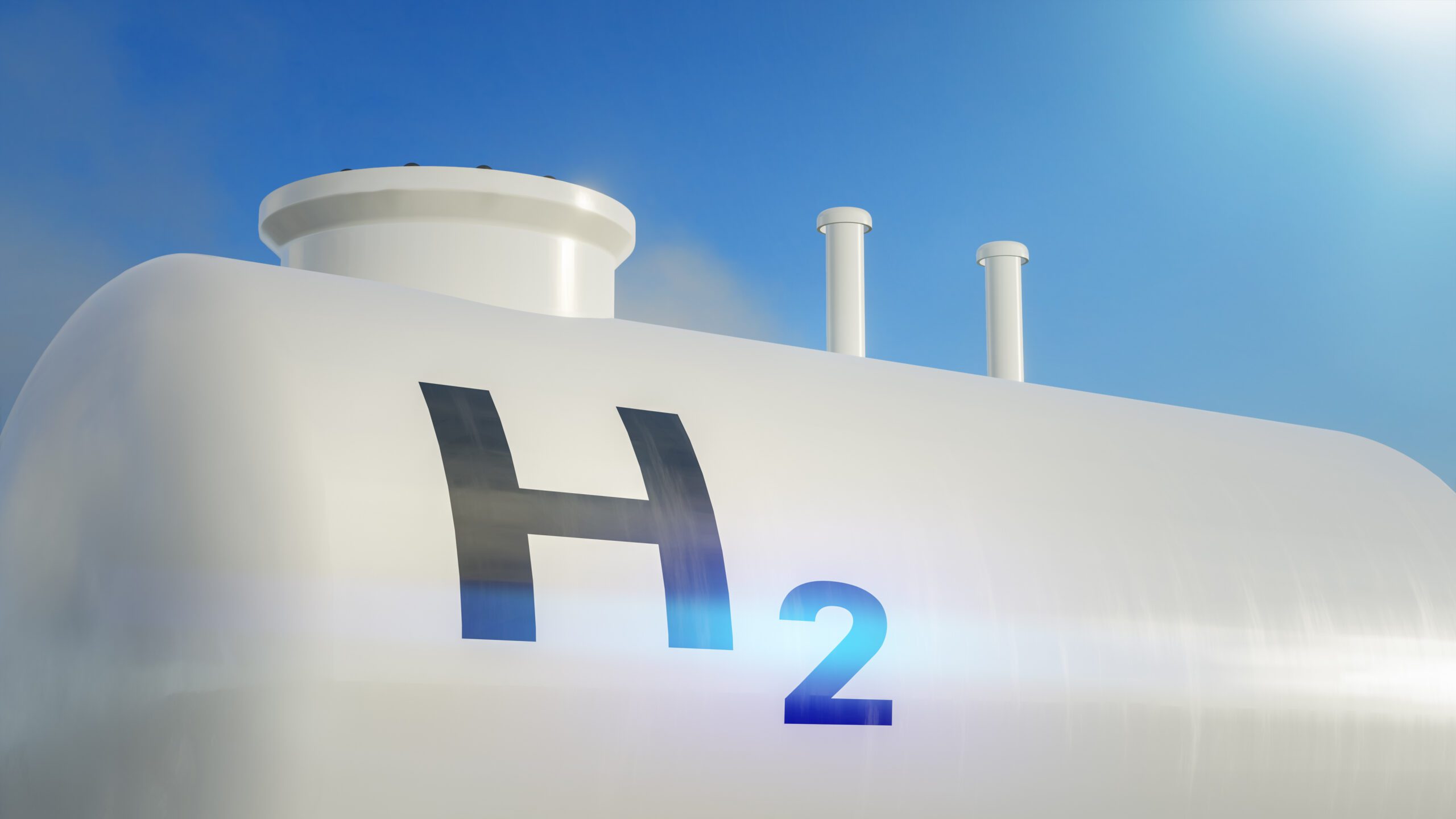
UK government contributes to the transition from gas to hydrogen
The UK government has identified hydrogen firing as a promising long-term solution for high-temperature industrial processes. In particular, in March, asphalt production using this material was launched for the first time under a new scheme. Since 2022, cooperation has been developed under a BEIS-supported scheme. It includes firing lime kilns using various mixtures of hydrogen and natural gas. In particular, the use of 100% hydrogen is envisaged. However, how is this direction developing now, and how will it affect the construction industry in the future?
The main source: Backing for bricks baked with hydrogen
What does this situation present?
Let us start from the beginning. Wienerberger has secured funding from the UK government, which will enable the modernization of two brick kilns for hydrogen operation. The funding, provided through the Industrial Energy Transformation Fund (IETF), will partially support a £6 million conversion program aimed at switching existing natural gas-fired kilns at the site to operate on 100% green materials. This will make Denton the world’s first industrial brick plant operating on hydrogen. The Denton brick plant is now a flagship project for the UK ceramics sector. It provide a replicable roadmap for future decarbonisation across the wider manufacturing network.
The project includes the upgrade of two tunnel kilns, replacement of 224 natural gas burners, installation of new infrastructure. And also modernization of electrical and control systems without altering the structural integrity of the existing kilns.
How will hydrogen transition influence the industry in the near future?
A future challenge for heavy industrial energy consumers will be whether hydrogen can be supplied at scale at a national level. Existing gas pipelines and related infrastructure may be suitable, but they will require significant upgrades to it deliver. This also impacts the discussion on the electrification of home heating. A full transition to heat pumps for homes and electric boilers for hot water supply will reduce demand on these networks and their available funding.
Other options include clustering energy consumers, but this would require sufficient scale to justify local hydrogen electrolysis from renewable energy sources, or integration with carbon capture and storage infrastructure to produce so-called blue hydrogen from natural gas. Since many construction materials depend on specific geological conditions, sites suitable for material production may not be suitable for hydrogen production.
It is expected that once fully operational, the transition from natural gas to green hydrogen will reduce CO₂ emissions at the Denton brick plant by more than 11,600 tonnes per year, which is equivalent to a 9% reduction in Wienerberger Limited’s annual carbon emissions under Scope 1 and 2.
Fencyx, as one of the leaders in the UK building industry, follows this situation. We hope that the transition from gas to hydrogen will open new opportunities for the construction industry. It may also provide the possibility for the industry to reach a new level.
Read also: Age gradation in the UK building industry moves to the better side