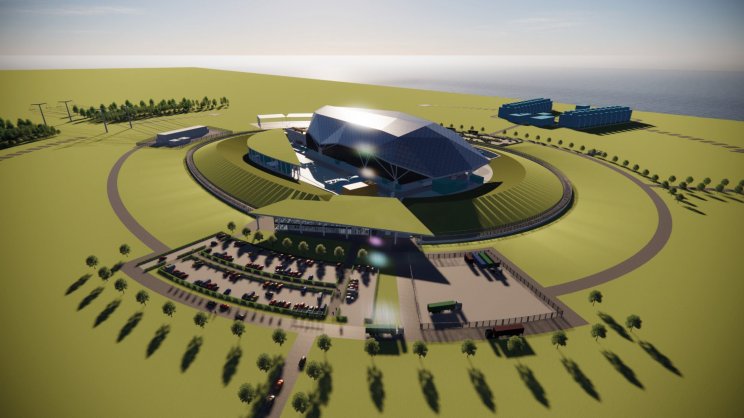
Rolls-Royce cancels its SMR project for 200 million pounds
Rolls-Royce announced that it will suspend its plans to end building a nuclear powerplant factory. Previously, the UK government expected that before 2030 production capacity would already exist, providing a new age in E-energy.
Main source: ANALYSIS: Rolls-Royce pulls plug on £200m SMR project
What forced Rolls-Royce to suspend SMR project
Rolls-Royce officials say that the main reason for the determination is government delays. In particular, Great Britain Nuclear (GNB) constantly delays the issuance of documents and transfer decisions about where new factories will built by the end of 2024. Even 210 million pounds of government subsidies don`t help to solve this problem. “Our efforts are focused on identifying the best site to support our deployment at pace” – the company said.
What consequences it may have
There are a lot of side effects, which makes the situation bright. First of all, the performance of the government’s “small module reactor” program will move further in terms. In the beginning was planned that mass production of new reactors begin in 2030, and nearly 40 reactors had already been planned. But due to stop the project this plans will move further.
Also, it will hurt the UK economy. British government expects that the existence of new technology will lead to billions of pounds of investment in the UK economy, as many countries look for new, compact, effective, and ecological sources of power. The last modeling shows that 1 reactor gives 200 MW of heat and steam and 80 MW of electricity.
Conclusion
The cancellation of Rolls-Royce’s SMR project represents a significant setback for both the company and the UK’s energy sector. Technical challenges, cost overruns, market competition, and regulatory uncertainties have collectively contributed to this decision. Moving forward, stakeholders must reflect on the lessons learned from this experience and work collaboratively to address the challenges facing the nuclear industry. Clear policy direction, investment support, and innovation will be essential to ensure a sustainable and secure energy future for Great Britain.
Read also: UK building prices may increase due to the ventilation systems