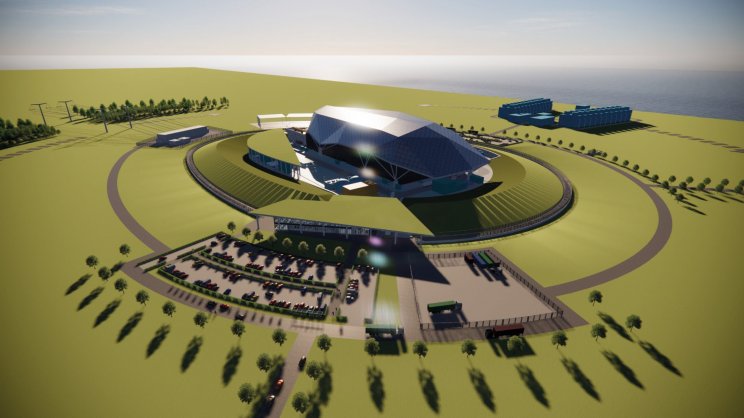
Rolls-Royce announced that it will suspend plans to build a nuclear powerplant factory. Previously, the UK government expected production capacity to exist before 2030, providing a new age in energy.
- Government delays in documents and site decisions contributed to the suspension.
- The planned mass production of reactors may be delayed beyond 2030.
- The decision could affect investment and the UK energy sector.
- Clear policy direction and innovation are needed for a sustainable energy future.
What forced Rolls-Royce to suspend the SMR project?
Rolls-Royce officials said government delays were the main reason. Great British Nuclear repeatedly delayed documents and decisions about where new factories would be built by the end of 2024. Even £210 million in government subsidies did not solve the problem.
What consequences may it have?
The government’s small modular reactor programme will move further beyond its planned timeline. Mass production was expected to begin in 2030, with nearly 40 reactors planned, but these plans will be delayed.
The decision may also hurt the UK economy. The government expected new technology to bring billions of pounds of investment as countries seek compact, effective, ecological power sources. One reactor is modelled to provide 200 MW of heat and steam and 80 MW of electricity.
Conclusion
The cancellation represents a setback for Rolls-Royce and the UK energy sector. Technical challenges, cost concerns, market competition, and regulatory uncertainty contributed to the decision. Clear policy direction, investment support, and innovation will be essential for a secure energy future.